
Do You Need a Bone Graft Before Dental Implants? A Hamilton Patient’s Guide
If you have been told you might need a bone graft before getting a dental implant, your first reaction was probably something like: “Wait, why?” It sounds like an extra step, an extra cost, and potentially more healing time. And in some ways, all of that is true. But once you understand what a bone graft actually does and why it exists, the logic becomes very clear.
This guide walks through who needs one, what the procedure involves, and what to realistically expect before and after.
Why Jawbone Loss Happens in the First Place
When a tooth is extracted or falls out, something happens beneath the surface that most patients are never told about. The jawbone in that area begins to shrink. It is not a dramatic change overnight, but over months and years, the bone that once surrounded the tooth root gradually resorbs. The body, sensing that there is no longer a tooth to support, essentially stops maintaining bone density in that spot.
Gum disease accelerates this process considerably. Untreated periodontal disease eats away at the bone around teeth while they are still in the mouth. By the time a tooth is lost due to advanced gum disease, the surrounding bone is often already compromised. As we have discussed in our post on why periodontal disease affects far more than your gums, the structural damage caused by chronic gum infection extends deeply into the tissues that support your teeth, including the bone itself.
The result, for many patients, is a jawbone that simply does not have enough volume or density to anchor a titanium implant securely.
What a Bone Graft Actually Does
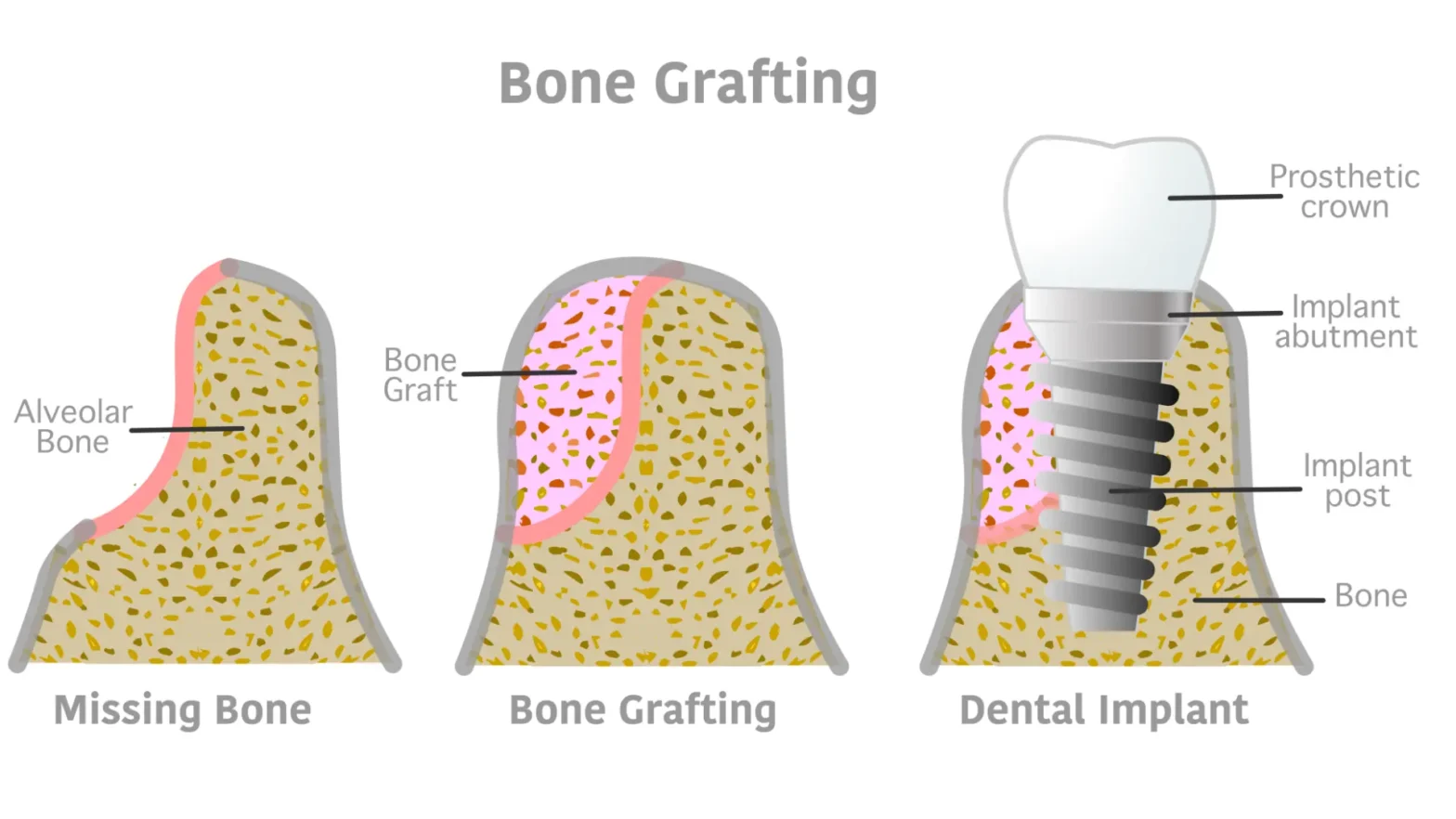
A dental bone graft is a procedure that rebuilds lost bone volume by introducing graft material to the deficient area. Think of it as creating a scaffold. The graft material holds space and provides a framework into which your body’s own bone-forming cells can grow and eventually consolidate into solid, healthy jawbone.
The Canadian Association of Oral and Maxillofacial Surgeons recognizes bone grafting as a standard preparatory step before implant placement when bone loss has compromised the implant site. It is not a workaround or a last resort. For many patients, it is simply a required stage in a well-planned implant process.
The graft material itself can come from several sources. Some procedures use processed bone from a human donor bank, others use material derived from animal sources that has been rigorously sterilized, and in some cases the patient’s own bone is harvested from another area of the jaw. Synthetic bone substitutes are also available. Your periodontist will assess your specific anatomy and recommend the most appropriate option.
Not Everyone Needs One
This is worth saying plainly: a bone graft is not automatic. Some patients have sufficient bone volume and density to receive an implant without any preparatory grafting at all. Others need only a minor socket preservation graft at the time of extraction to prevent the bone loss that would otherwise occur. More significant bone loss requires a more involved grafting procedure with a longer healing period before the implant can be placed.
The only way to know where you stand is through a proper clinical evaluation, which at OMG Perio includes cone beam CT scanning and intraoral digital scanning. These technologies give us a precise, three-dimensional picture of your bone structure before any treatment decisions are made.
What to Expect: The Procedure and the Healing Timeline
A bone graft procedure for implant preparation is typically performed under local anaesthetic in the office. Sedation is available for patients who prefer it, and if dental anxiety has been a barrier to treatment in the past, that is worth discussing before your appointment. Most patients find the procedure considerably less involved than they anticipated.
After the graft is placed, initial soft tissue healing takes about a week. The bone itself takes longer. Depending on the extent of the graft, you can expect to wait three to six months before the site is ready for implant placement. This is not a delay for its own sake. It is the time required for your bone to integrate the graft material and develop the structural integrity needed to support an implant long-term.
We covered the implant recovery process in detail in our guide on how long it takes to heal after a new implant, which explains what to expect at each stage. The bone graft timeline runs parallel to that broader process, and your care team at OMG Perio will walk you through exactly what to expect at each stage.
Why Choosing the Right Specialist Matters
A bone graft done incorrectly, with insufficient material, in an inadequately prepared site, can result in graft failure and further bone loss. The quality of the work at this stage has a direct bearing on how well the implant integrates later. Periodontists are specialists in exactly the bone and soft tissue environments where this work takes place.
If you are exploring a bone graft for dental implant in Hamilton, OMG Perio brings together the clinical depth of a university-affiliated periodontal practice with the advanced imaging and precision planning that complex implant cases require. Dr. Glogauer and Dr. Borenstein have the specialist training to assess your bone volume accurately, recommend the right type of graft, and manage the entire process through to a successful implant outcome.
Frequently Asked Questions
Does a bone graft hurt?
The procedure itself is performed under local anaesthetic, so you should not feel pain during treatment. Some soreness and swelling in the days that follow is normal. Most patients manage this comfortably with over-the-counter pain relief and find symptoms resolve within a week.
How long does bone graft healing take before I can get my implant?
For minor socket preservation grafts, healing may take as little as three months. More significant ridge augmentation procedures typically require four to six months before the site is ready for implant placement. Your specific timeline will depend on the extent of bone loss and the type of graft performed.
Will my insurance cover a bone graft?
Coverage varies by provider and plan. In cases where the graft is clinically necessary for implant placement, partial coverage may apply. Our team can help you understand your options and what to expect from your insurer before treatment begins.
Can I wait and skip the bone graft?
Placing an implant into a site with insufficient bone significantly increases the risk of implant failure. The implant needs solid bone to fuse with during the osseointegration process. If your bone has been assessed as inadequate, skipping the graft is not a safe shortcut. It typically means starting over after a failed implant, which is more time, more cost, and more complexity than the graft itself.
Considering dental implants and wondering whether a bone graft is part of your path? Contact OMG Perio at (905) 526-6078 or request a consultation online to get a clear picture of your options.