
Can a Loose Tooth From Gum Disease Be Saved, or Does It Need to Be Removed?
A loose tooth caused by gum disease can sometimes be saved, particularly when treatment can control the inflammation and enough supporting bone and tissue remain. However, teeth with extensive bone loss, severe mobility or additional structural damage may not have a predictable long-term outlook.
If an adult tooth feels loose, it should be examined promptly. A periodontist can assess the extent of damage, determine whether the tooth is treatable and explain when extraction may be the more appropriate option.
At OMG Perio in Hamilton, periodontal assessments help identify the treatment options available to patients experiencing gum disease, bone loss and changes in tooth stability.
Why Does Gum Disease Cause Adult Teeth to Become Loose?
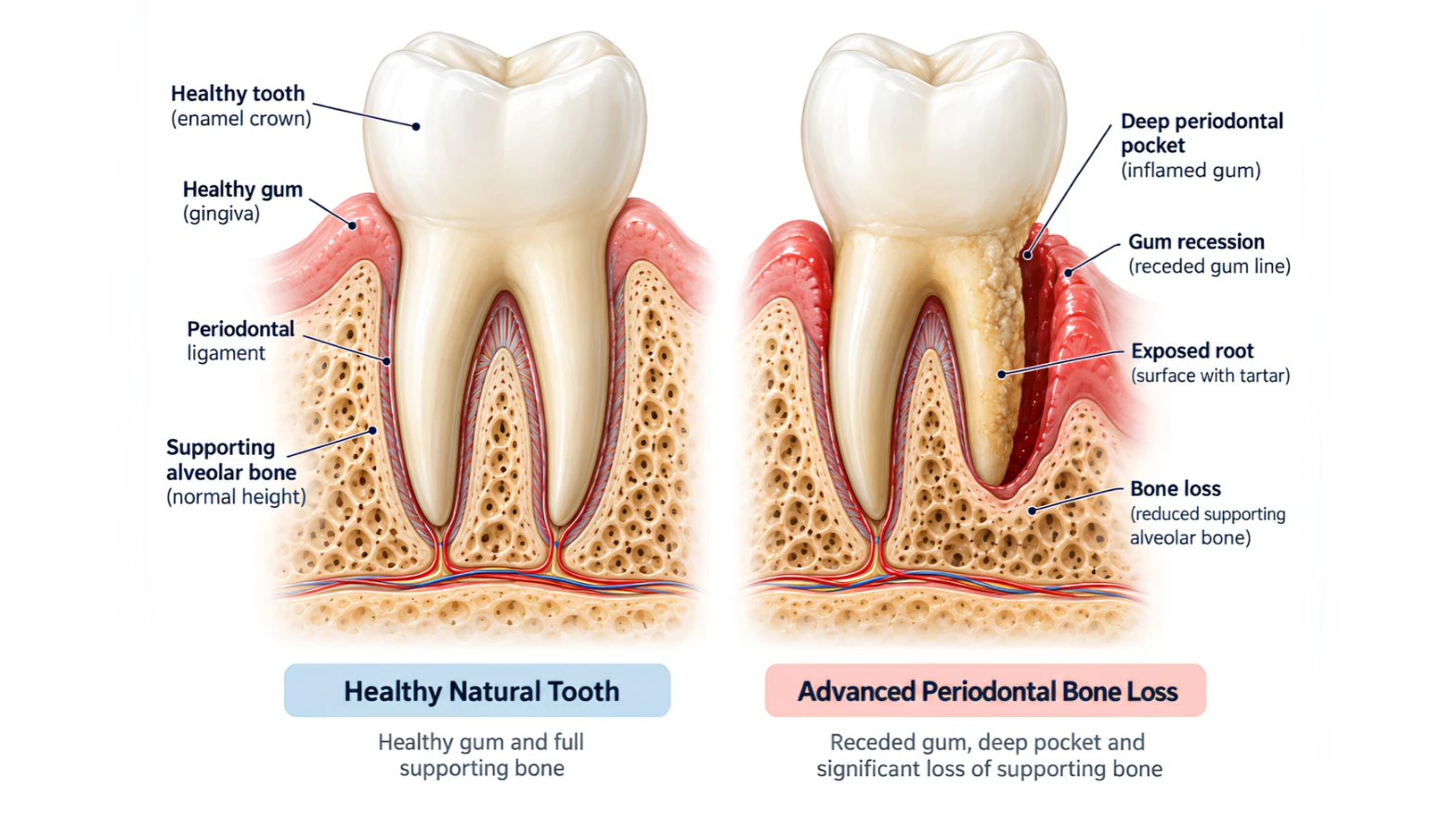
Gum disease can loosen adult teeth because it damages the tissues and bone that hold them securely in place. Healthy teeth are supported by the surrounding jawbone and periodontal ligament, a network of fibres connecting the tooth root to the bone.
Unlike dental implants, natural teeth are not fused directly to bone. A small amount of normal tooth movement is part of how the periodontal ligament functions. Periodontitis, an advanced form of gum disease, develops when bacterial plaque contributes to a persistent inflammatory response affecting these supporting tissues.
As periodontal disease progresses, the supporting ligament and bone can deteriorate.
This process may lead to:
- Deeper pockets between the teeth and gums
- Gum recession and exposed tooth roots
- Loss of supporting jawbone
- Changes in how the teeth fit together
- Increased tooth mobility
- Tooth movement or spacing that was not present before
A tooth may initially feel only slightly different when chewing. In other cases, a patient notices that a tooth has shifted or developed a visible gap. Pain is not always present, even when significant periodontal damage has occurred.
Other conditions, including injury, excessive biting forces and infections originating inside the tooth, can also cause mobility. That is why a professional diagnosis is necessary before assuming gum disease is responsible.
Can a Loose Tooth From Gum Disease Be Saved?
Yes, a loose tooth affected by periodontal disease may be preserved when the underlying condition is treatable and sufficient supporting structures remain. Tooth mobility alone does not determine whether extraction is necessary.
A slightly mobile tooth with inflammation may improve after periodontal treatment. A tooth with more advanced bone loss may also remain functional when the disease can be controlled and its long-term stability is considered acceptable. However, the outlook becomes less predictable when a tooth has lost a substantial amount of supporting bone or has additional problems, such as a vertical root fracture.
A periodontist evaluates the entire clinical picture rather than basing the recommendation on one symptom. There is also an important distinction between saving a tooth and making it completely firm again. Successful treatment may control periodontal disease and allow a tooth to remain functional even if some mobility persists.
The objective is to preserve a healthy, maintainable tooth, not simply to eliminate movement at any cost.
How Does a Periodontist Determine Whether a Tooth Can Be Saved?
A periodontal assessment considers the amount of remaining support, the condition of the gums, the tooth itself and how it functions when biting.
Several findings help determine whether preservation is realistic.
Periodontal Pocket Measurements
A periodontist uses a small measuring instrument called a periodontal probe to assess the spaces between the gums and teeth. Deep pockets may indicate destruction of the supporting tissues and provide areas where bacterial deposits can accumulate. The assessment also includes bleeding, gum recession and other signs of inflammation.
Bone Loss on Dental Imaging
Dental X-rays help reveal the amount and pattern of bone loss surrounding the tooth. The periodontist assesses how much supporting bone remains and whether the damage is concentrated in a particular area. Certain types of localized bone defects may be suitable for regenerative treatment, while extensive bone loss can make preservation more difficult.
Degree of Tooth Mobility
Tooth movement is assessed clinically to determine its severity and direction. A tooth that moves slightly from side to side may have a different prognosis than one that moves considerably or has vertical movement. Mobility must be interpreted alongside the amount of remaining bone, inflammation and bite forces.
Tooth Structure and Bite
A tooth can have periodontal disease and another dental condition at the same time. Deep decay, an untreated root canal problem, a root fracture or substantial structural damage may influence whether the tooth is worth preserving. The periodontist may also assess whether the tooth is receiving excessive pressure during chewing or clenching.
Overall Periodontal Health
The condition of the other teeth matters. A single loose tooth in an otherwise healthy mouth may require a different investigation than several loose teeth associated with widespread periodontal disease. Medical history, smoking and the patient’s ability to maintain effective oral hygiene can also influence the recommended treatment plan.
What Treatments May Help Save a Loose Tooth?
Treatment begins by addressing the cause of the mobility and determining whether the tooth has a realistic chance of remaining functional. Depending on the diagnosis, several approaches may be considered.
Scaling and Root Planing
Scaling and root planing is a non-surgical treatment used to remove bacterial plaque and hardened deposits from beneath the gumline. When periodontitis is present, these deposits contribute to inflammation and the destruction of supporting tissues. By thoroughly cleaning the affected root surfaces and improving plaque control, treatment can reduce inflammation and help stabilize periodontal health.
For teeth that are mobile partly because of inflamed supporting tissues, improvement may occur as healing progresses. However, scaling and root planing cannot reliably rebuild all the bone that has already been lost. Your periodontist will reassess the gums after treatment to determine whether further care is required.
Periodontal Surgery
When deep periodontal pockets remain after non-surgical treatment, surgery may be considered. Periodontal surgery allows improved access to difficult-to-clean root surfaces and bone defects. The procedure selected depends on the type and extent of periodontal damage.
Not every patient with loose teeth needs surgery. The decision is based on the response to initial treatment and the likelihood of achieving stable periodontal health. OMG Perio provides several periodontal treatment options for patients with different stages of gum disease.
Bone Regeneration
Some patients have localized bone defects that may be suitable for regenerative periodontal procedures. These treatments are designed to encourage regeneration of supporting tissues in carefully selected areas. Grafting materials, barrier membranes or other regenerative techniques may be used, depending on the clinical findings.
The shape of the bone defect, remaining tissue support and overall periodontal health all influence the likelihood of success. Regeneration is not possible in every case, and no procedure can guarantee the restoration of all bone lost to advanced periodontal disease.
Tooth Splinting
Splinting involves connecting a mobile tooth to one or more neighbouring teeth using a suitable dental material or restoration. The purpose is to improve comfort and stability during function. Splinting may be considered temporarily during periodontal treatment or, in selected cases, as a longer-term supportive measure.
It does not eliminate periodontal infection or replace treatment of the underlying disease. A splinted tooth still requires careful cleaning, professional maintenance and monitoring.
Bite Adjustment
Excessive biting forces can contribute to discomfort and mobility in teeth with reduced periodontal support. Where appropriate, a periodontist may consider carefully adjusting specific tooth contacts or coordinating other treatment to address problematic forces.
Bite adjustment is not a substitute for controlling gum disease and is not indicated for every mobile tooth.
Can a Loose Tooth Become Firm Again After Treatment?
A loose tooth may become less mobile after successful periodontal treatment, but the amount of improvement varies. When inflammation is a major contributor, reducing the inflammation may improve the condition of the supporting tissues.
However, lost bone and periodontal attachment do not automatically regenerate when infection is controlled. A tooth with substantial permanent loss of support may continue to have some movement, even when its periodontal condition becomes stable. This does not necessarily mean treatment has failed.
The important questions are whether the disease is controlled, the tooth is comfortable, the patient can maintain proper hygiene and the tooth has a reasonable long-term prognosis. The periodontist will assess these outcomes during follow-up appointments and may recommend additional treatment if pockets, inflammation or mobility remain problematic.
When Is Tooth Extraction the Better Option?
Extraction may be recommended when a tooth has such extensive damage that preserving it is unlikely to provide a stable, maintainable result. Examples include severe loss of supporting bone, a tooth with very poor remaining periodontal attachment, an untreatable root fracture or combined problems that significantly reduce the chance of successful treatment.
A tooth may also have a poor prognosis if recurring infection or severe mobility continues despite appropriate care.
The decision should consider more than whether a procedure can temporarily retain the tooth.
A useful treatment plan asks:
- Is the tooth likely to remain comfortable and functional?
- Can the patient clean and maintain it effectively?
- Is the periodontal disease responding to treatment?
- Would further treatment offer a reasonable chance of lasting benefit?
- What are the risks and consequences of delaying extraction?
When preservation is not advisable, the periodontist can discuss tooth extraction and whether the site should be prepared for future replacement.
Dental implants may be an option for suitable patients, although active periodontal disease and oral hygiene concerns should be addressed as part of treatment planning.
What Should You Do if an Adult Tooth Feels Loose?
An adult tooth that has become loose should be assessed rather than watched indefinitely. Until you receive professional advice, avoid deliberately wiggling the tooth with your fingers or tongue. Try not to bite hard foods directly on the affected tooth. Continue cleaning your mouth gently with a soft toothbrush, since avoiding oral hygiene altogether can allow plaque to accumulate.
Do not attempt to tighten the tooth using home remedies, adhesives or over-the-counter products. If the looseness develops after an accident, contact a dental professional urgently. A knocked-out permanent tooth is a dental emergency that requires immediate guidance.
A loose tooth accompanied by facial swelling, fever, worsening pain or drainage may indicate an infection requiring prompt attention. Difficulty breathing or swallowing requires emergency medical assessment. Even without pain, mobility can indicate changes in the bone and tissue surrounding the tooth.
OMG Perio has additional guidance on bleeding gums, loose teeth and when to see a periodontist.
Protecting Your Natural Teeth With Periodontal Care in Hamilton
Preserving natural teeth whenever clinically appropriate is an important goal of periodontal treatment. The earlier gum disease is identified and managed, the more opportunities there may be to control inflammation and limit further damage.
For patients who already have loose teeth, a thorough examination can help distinguish between teeth that may respond to treatment and those with an unfavourable prognosis. At OMG Perio in Hamilton, periodontal care includes non-surgical treatment, periodontal surgery and regenerative procedures when clinically indicated.
If you have noticed a loose tooth, changes in your bite or signs of advanced gum disease, contact OMG Perio to arrange a periodontal assessment. Understanding your options before deciding on extraction can help you make an informed choice about your oral health.
Frequently Asked Questions
Can a loose adult tooth tighten on its own?
A loose adult tooth should not be expected to tighten on its own without identifying and addressing the cause. Some mobility caused by inflammation may improve with appropriate treatment, but mobility related to significant bone loss requires professional assessment.
Can bone grow back around teeth damaged by gum disease?
Some forms of periodontal bone loss may be suitable for regenerative treatment, but rebuilding lost bone is not possible in every situation. The shape and location of the defect, remaining tissue support and disease control determine whether a regenerative procedure may be beneficial.
Is periodontal surgery always necessary to save a loose tooth?
No, periodontal surgery is not always necessary to preserve a mobile tooth. Some patients respond well to non-surgical treatment, while others may need additional procedures after their gums and supporting tissues have been reassessed.
How do I know if my tooth is too damaged to save?
Only a clinical examination can determine whether a tooth has a poor or hopeless prognosis. Your periodontist will assess bone support, mobility, periodontal pockets, tooth structure and other factors before recommending preservation or extraction.
Should I see a dentist or periodontist for a loose tooth?
A general dentist can assess an adult tooth that has become loose and investigate possible causes. A periodontist provides specialized assessment and treatment when periodontal disease, significant supporting bone loss or complex tooth-preservation decisions are involved.